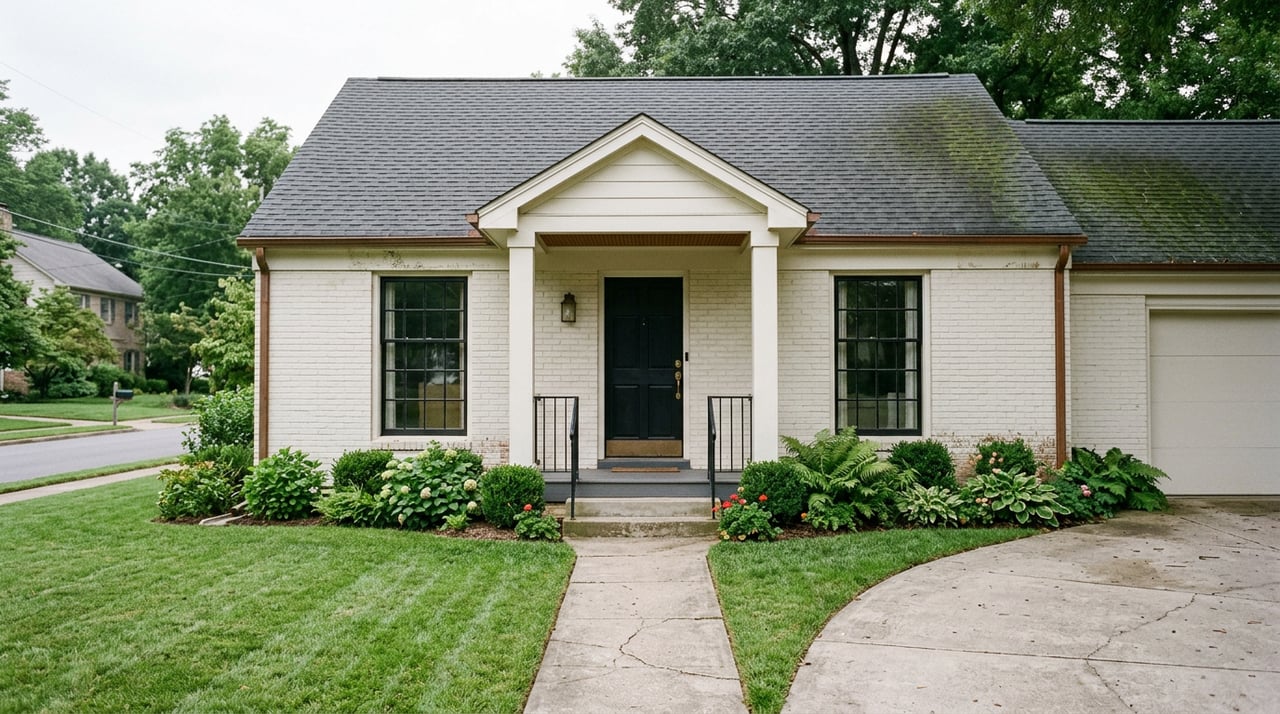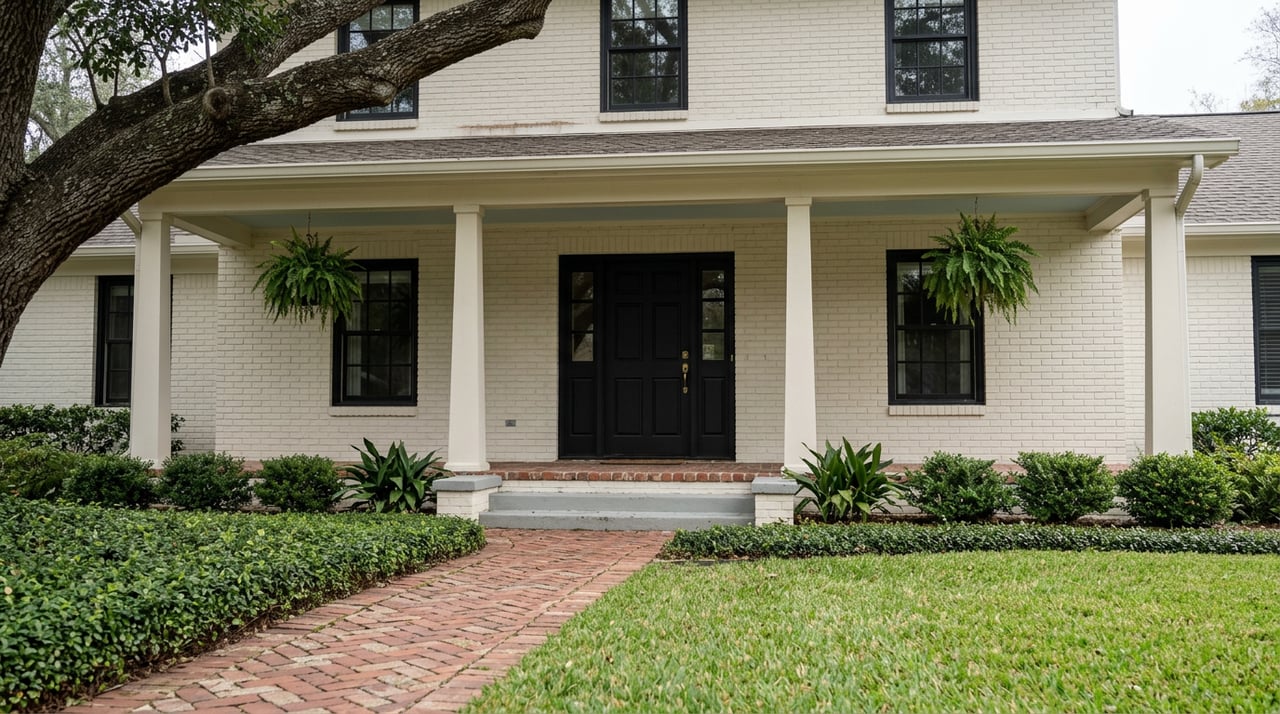
Walk into a model home in Godley Station or Savannah Quarters right now and you will likely hear a number that sounds too good to pass up. One recent Landmark 24 Homes listing near Godley Station advertised a rate buydown through its affiliated lender, Landmark24 Mortgage, bringing the rate down to 4.49% or 4.99%, well under what most buyers are quoted on a standard 30-year loan this year. It reads like a discount. It is not one. It is a loan, and loans get repaid.
That distinction matters more in Pooler right now than almost anywhere else in the Savannah market, because Pooler is where the incentive game is being played hardest. The city sits at the intersection of I-95 and I-16, its master-planned communities are still adding phases, and national builders including Lennar, D.R. Horton, Pulte, K. Hovnanian, and Dream Finders are competing for the same buyer pool inside neighborhoods like Savannah Quarters, The Farm at Morgan Lakes, New Hampstead, and Savannah Highlands. When builders compete on rate instead of price, the comparison a buyer thinks they are making against a resale home two streets over is not the comparison they are actually making.
What a Buydown Actually Buys You
A temporary rate buydown, most commonly structured as a 2-1 or 3-2-1, works by prepaying part of your interest at closing so your payment starts low and climbs back to the real rate over one to three years. A 2-1 buydown cuts your rate by two percentage points in year one and one point in year two, then reverts fully in year three. A 3-2-1 stretches that runway to four years, cutting the rate by three points, then two, then one, before landing on the note rate.
Here is the shape of that reset on a hypothetical $370,000 loan, roughly the median new-construction price point in Pooler's amenity communities this year, at a 7% note rate with a 2-1 structure:
| Year | Effective Rate | Approx. Monthly P&I |
|---|---|---|
| Year 1 | 5.0% | ~$1,986 |
| Year 2 | 6.0% | ~$2,219 |
| Year 3 onward | 7.0% | ~$2,462 |
That is close to $480 a month of difference between what the buyer signs up to feel in year one and what they are contractually paying by year three. The builder funds that gap out of its own incentive budget, not out of the sale price, which is exactly why it shows up on the mortgage statement instead of the settlement statement. Lenders are required to qualify buyers at the full note rate, not the discounted one, specifically because this reset is real and predictable. The safeguard exists. It just does not stop a buyer from anchoring emotionally to the year-one number when they are standing in a model home comparing it to a resale listing at the same asking price.
Why a Resale Seller in Pooler Can't Match This
A resale seller in an established Pooler subdivision does not have a captive mortgage arm, a national marketing budget, or the ability to spread a buydown's cost across dozens of closings a month the way a production builder can. If a resale seller wants to compete on payment, the money has to come out of their own equity, either as a price cut or a self-funded buydown, and most sellers do not have the margin to do both.
That asymmetry is showing up in Pooler's numbers this summer. As of July 2026, Pooler's median list price sat at $389,000, down roughly 3% from a year earlier, at about $183 per square foot. Statewide, Georgia's median sales price barely moved in the same window, up just 0.1% to $359,000 as of mid-August 2026, according to the Georgia Association of REALTORS. Pooler is softening while the state as a whole is holding flat, which is the kind of gap that shows up when one side of a local market, new construction, has a financing lever the other side does not.
This mirrors a pattern researchers have flagged nationally. Builders have narrowed the traditional new-construction price premium in suburban markets to roughly 7% over resale, compared with premiums well above 70% in dense urban cores, largely by discounting through financing incentives rather than sticker price. Pooler's builder-heavy corridor along Pooler Parkway and Jimmy DeLoach Parkway fits that suburban pattern closely. The sticker prices on new and resale product in Pooler look closer than they used to. How each side got there is not the same story at all.
The Costs That Ride Along With the Discount
A buydown is not the only line item that changes the real cost of a new-construction home in Pooler. Most of the master-planned communities carrying these incentives also carry HOA dues that stack on top of the mortgage payment regardless of what the rate does. The Farm at Morgan Lakes, for example, has referenced a monthly HOA figure around $105 in its own marketing, covering shared amenities like the clubhouse, pool, and trails that are common across Godley Station and Savannah Quarters product. That figure is worth confirming directly with the HOA before closing, since builder marketing pages are not always the final word on current dues.
There is also a newer wrinkle specific to Pooler that buyers considering an investment angle should know about. The city adopted its first structured short-term rental ordinance, O2025-09.A, effective March 18, 2025. Its central provision blocks any new STR certificate from being issued within 500 feet of an existing licensed short-term rental. On a typical Pooler subdivision lot pattern, one active permit can take dozens of neighboring homes out of eligibility. If part of the appeal of a new-construction purchase is flexibility down the road, that flexibility is narrower in Pooler than it was two years ago, and a buydown does nothing to change it.
How to Unbundle a Builder Incentive Before You Sign
None of this means new construction is a bad move in Pooler. It means the incentive needs to be pulled apart before it gets compared to anything else. A few questions do most of the work:
- What is the note rate, the rate you will actually be paying in year three, not the promotional rate on the sign?
- Can the dollar value of the buydown be redirected toward the sale price instead? Some builders will let you choose. One recent Pooler new-construction listing offered a flat $10,000 credit buyers could apply to a rate buydown, closing costs, or even a fence, which tells you the builder sees these as interchangeable dollars, not a fixed discount tied to the rate itself.
- What are the current HOA dues, in writing, from the association itself rather than a builder's marketing page?
- If a rental exit strategy matters to you, has the lot's address been checked against Pooler's 500-foot STR separation rule?
- What would the same monthly payment look like on a resale home nearby, financed at a standard rate with no reset built in?
That last question is the one that resolves most of the confusion. A resale home priced similarly to new construction, without a payment cliff waiting in year three, sometimes turns out to be the better math over a five or ten year hold, even though it never had a 4.49% headline to draw you in the door.
Pooler's builders are not doing anything unusual. Rate buydowns are a legitimate, widely used tool, and for a buyer who plans to refinance or expects rising income, the early savings can be real value, not a gimmick. The point is not to distrust the incentive. It is to read it correctly, ask for the note rate before you ask for anything else, and run the year-three number before you fall in love with the year-one one.
If you are weighing a Godley Station model home against a resale listing in Southbridge or Berwick and want someone to run both scenarios side by side, McIntosh Realty Team has spent years working both sides of Pooler's market and can walk you through what each option actually costs once the incentive clock runs out.